



Six-figure sum for lorry driver after work injury and delayed treatment led to leg amputation

What started as a seemingly straightforward workplace accident changed one Glasgow man's life forever.
Our client - who wished to remain anonymous but we’ll refer to as Mr G - was struck in his lower left leg by heavy equipment during the loading of a van.
The impact caused swelling and bruising but as the skin wasn't broken the 42-year-old figured the injury would heal on its own over time.
Unfortunately, it was just the first small domino that sparked a painful, life-changing chain of events.
Mr G said: “I had no idea how bad things were going to get.”
As the weeks passed the injury worsened.
The bruising became discoloured, the skin broke down and a painful ulcer developed.
Mr G repeatedly sought medical help but - as a legal investigation later found out - these opportunities to diagnose and treat a serious problem were missed.
Throughout this period, Mr G was supported by his wife. She recalled: “It was very painful for him. He was getting to the stage that he was just dreading the district nurses coming out.
"The wound became an open, weeping sore and fluid seeped through dressings every day.
“He could barely walk yet he still forced himself out to work because he was determined to pay the bills.”
Mr G’s condition continued to deteriorate and more than two years after the initial workplace injury - with his leg now profoundly infected - doctors confirmed an amputation was unavoidable and he was no longer able to work.
Surgeons initially attempted a below-knee amputation but complications meant a second operation was needed just weeks later - this time an above-knee amputation.
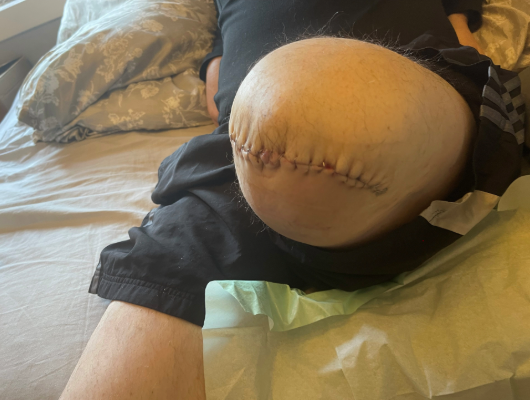
Mr G was wheelchair-bound for months and eventually received a microprocessor prosthesis.
Adjusting to his new life brought fresh challenges as he could no longer work in the same role, everyday tasks required careful planning and his hobbies of fishing and shooting were seriously impacted.
Mr G added: “The whole process was really quite difficult... having to go to the same appointments again and again really got me down.
“The only positive was the relief of knowing the constant pain had ended.
"It's frustrating it took so long. If something had been done sooner I might not have lost my leg or, at the very least, if they'd done the amputation sooner then I’d have my knee.
“In fact, I think if the knee was saved then there’s a good chance I’d probably have got back to work sooner and never made a claim.
“But after feeling like I’d been let down and now unable to pay the mortgage I felt like I had no choice but to get legal help - even just to check if I had any rights or options.”
Mr G came to Digby Brown after doing some online research.
From there he was put in touch with Kirsty O’Donnell, Partner in our Serious Injury team, and she confirmed he did have rights, and he did have options.
Alongside the firm’s Clinical Negligence team, Kirsty investigated what happened and gathered the medical evidence needed for a strong case.
The medical evidence showed the injury at work caused internal vascular damage to his leg called ischaemia (a condition which restricts blood flow).
As part of the claim, Kirsty then spoke with an independent medical expert about the medical care Mr G received after the injury.
The expert believed there were four occasions in a seven-week period when urgent referrals should have happened but didn't.
These included not referring Mr G to a vascular surgeon, not acting on X-ray findings, not responding to his worsening condition and giving antibiotics without a vascular assessment.
It was argued that had any one of these actions been carried out then Mr G’s leg could have been saved.
However it wasn’t as simple as blaming the medical staff because it was actually the workplace injury that started the whole affair – and had that injury not happened, then the medical failures would not have happened either.
This meant Mr G’s claim, which was extremely complex, considered the actions and consequences of everything and everyone and first, an insurance company offered him just £5,000 but Kirsty advised this did not reflect the long-term, life-changing consequences Mr G faced.
Instead, she was able to secure a settlement nearly 90 times the initial offer so Mr G could adapt his home, pay the mortgage and maintain ongoing independence.
Mr G said: “I've got so much praise for Kirsty. She's been really, really good.
"Anything I've asked Kirsty, she came back to me. She's always been, like, really generous with her time on the phone explaining things - she lifted a lot of the stress.”
Mrs G added: “It feels like we can finally close this chapter.
“He's getting back out into the garden, seeing friends again and starting to feel more like himself.
“I wish we came to Digby Brown sooner. We just didn’t know what to do until things got so bad.
“We just want to make sure people know their rights so no one else has to go through this.”
-
Share this
-

-
